...
XStore theme eCommerce WordPress Themes XStore best wordpress themes WordPress WooCommerce Themes Premium WordPress Themes WooCommerce Themes WordPress Themes wordpress support forum Best WooCommerce Themes XStore WordPress Themes XStore Documentation eCommerce WordPress Themes
Do School Phone Bans Actually Work? Benefits, Controversies & Future Trends

Do School Phone Bans Actually Work? Benefits, Controversies & Future Trends

Facebook
Twitter
Pinterest
WhatsApp

Phone bans are among the most debated education policies of the last decade. A high school in New York implemented a full-day phone restriction in 2022 and reported a 6% increase in standardized test scores within a single academic year, alongside fewer classroom disruptions. These results are mirrored in multiple states adopting similar rules. Physical systems such as phone lock boxes are becoming standard tools in schools enforcing these policies, providing a structured approach to compliance while reducing teacher workload.

Academic & Behavioral Benefits

Studies consistently suggest that restricting phone use during school hours can help improve student focus and academic performance. The London School of Economics (2015, updated 2023) tracked 91 secondary schools with a 6.4% average improvement in test scores after banning phones. Low-performing students saw gains almost twice that high. In 2023, Norwegian researchers found similar patterns: students restricted from using their phones received higher GPA scores and better longer-term academic outcomes.

The U.S. National Bureau of Economic Research also established a negative correlation between unrestricted social media access during the school day and student performance. Classroom observations across more than one state indicate that keeping phones securely away from desks increases sustained attention periods by 15–20%.

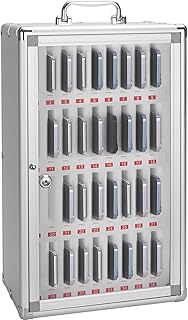
Schools that have adopted physical phone storage — everything from wall-mounted cell phone lock boxes to multi-device cabinets — report better enforcement, fewer interruptions and consistent policy compliance with little teacher intervention.

Benefits in Focus

  • Less Multitasking: Students spend more time doing lesson activities instead of switching back and forth between apps.
  • Increased Teacher Effectiveness: Teachers can teach lessons without persistent phone distractions,
  • Equity in Learning: Students without high-end devices are less likely to feel excluded or disadvantaged during class.

Mental Health & Social Impact

The absence of phones can shape social interactions and affect mental health. The Surgeon General’s 2023 advisory emphasizes that too much time spent on social media can lead to anxiety and stress for adolescents. Studies by the University of California at Los Angeles and Stanford show that notifications from our phones cause spikes in cortisol, which compromises concentration and well-being.

Schools that limit phone access often find:

  • Peer-to-peer more contact over lunch and breaks
  • Less anxiety due to constant comparison of social status
  • Increased engagement in non-digital collaborative efforts

While banning phones does not solve all social ills, having structured solutions provides a safe space for students to unplug while still allowing them to connect during specified times.

Controversies & Criticism

The application of phone restrictions poses operational and policy challenges. Parents occasionally worry about emergency communication. Contemporary schools counteract this with office phones, PA systems and formalized emergency protocols. Physical phone lock boxes make it more convenient to follow these protocols, allowing students to store them in a safe place and remain prepared for crisis moments.

Digital equity is another consideration. Not all students have reliable access to the internet at home.Some districts address this by pairing phone restrictions with device lending programs or dedicated classroom tablets.

In high schools, especially where students are older and more resistant to complaints, enforcement can be tricky. Schools that use lock boxes say adherence appears more consistent because the storage system eliminates ambiguity. And teachers who do use phones for QR-based lessons or research often adopt flexible policies — locking phones during direct instruction and allowing them to be used in independent work.

Which Kind of Locker Works Best for Your Environment?

Different storage solutions are best for classroom or office needs:

  • Single-use lockers work well for focused, individual device management in smaller classrooms or specialized areas.
  • Acrylic lockers provide clear visibility, making it easy for teachers to monitor devices and for students to quickly locate theirs.
  • High-tech digital lockers are ideal in schools or offices that manage many devices, where tracking and integrated charging can streamline daily operations.

Any space, age group of the students engaging with the devices in that workspace, and amount of devices itself should be considered to ensure that whatever type of storage solution you decide on is not only going to fit smoothly into your day-to-day routines but also align with what’s most vital to supporting operations.

Our most popular products based on sales.

Our products most often added to Wishlist's.

Our best-selling new and future releases.

Most popular products as Most Gifted Products.

Types of Phone Lock Boxes Compared

Choosing the best storage solution demands scrutiny of size, material, device capacity and security features.

Type

Material

Device Capacity

Security

Ideal Use Case

Longevity

Wall-Mounted Cell Phone Lock Box

Metal

10–30 devices

Key or combination locks

Classrooms with limited floor space

High

Multi-Device Cabinet

Metal or Acrylic

30–60 devices

Combination, key, or digital locks

But office-wide storage or high school labs

Very High

Acrylic Cell Phone Locker

Transparent acrylic

5–15 devices

Key or combination

Smaller classrooms, easy monitoring

Moderate

Single-Device Lockers

Metal or Acrylic

1 device per compartment

Key or digital

Specialized uses: exams, sensitive areas

High

When deciding between devices, consider important factors such as size and graphing needs, along with the simplicity of everyday use. In practice, buyers frequently overestimate their capacity requirements or select lockers that cannot accommodate larger devices — with the result being diminished effectiveness. High-end products provide superior sturdiness and built-in charging, which are both nice to have, but basic alternatives will be fine for us with younger students or in low-traffic settings.

Practical Buying Checklist

  • Count how many devices you have and their dimensions for storage.
  • Consider material’s longevity: metal if you’re a heavy user, acrylic for visibility.
  • Choose key, combination, or digital access for security priorities.
  • Ensure compatibility with charging needs.
  • Verify choice: mounted on wall or floor to save space.
  • Think about upkeep and how easy the materials will be to clean.
  • Do high-volume or digital systems come with warranties, and are they serviceable?

Future Trends

School phone policies are evolving, in response to technological and legislative developments:

  • Federal Legislation Momentum: Support for phone bans may influence funding and compliance expectations.
  • Full-Day Restrictions: States initially adopting classroom-only bans are moving toward bell-to-bell enforcement.
  • Tech-Assisted Enforcement: Smart lockers with digital logs and integration into management systems are gaining popularity.
  • International Influence: France, the UK, and the Netherlands provide successful case studies for U.S. schools considering stricter policies.
  • Parent-School Technology Contracts: Clear, formal agreements define responsibilities and streamline enforcement.

Top classroom phone storage solutions are now upgrading from basic lock boxes to smart connected systems that integrate with school administration software, helping schools safely and transparently oversee their students’ devices.

Conclusion

Studies show that phone bans at school, such as those in Iowa, can be a useful tool for amplifying academic focus and promoting better mental health and classroom management. Its effective implementation depends on operational infrastructure. Physical solutions, including wall-mounted cell phone lock boxes, multi-device cabinets and acrylic lockers help to put policy into sustainable practice. Schools that implement these systems report better compliance, less disruption and even quantifiable gains in classroom outcomes.

Legislation defines expectations. The physical tools for storing phone apps convert those expectations into action. The right storage solution is to bridge policy and reality, whether a full-day ban, classroom-only restriction or otherwise.

For the full list of phone lock boxes, classroom cell phone holders and wall-mounted mobile phone storage lockers that fulfill modern school requirements.

FAQ: 

Do phone bans enhance learning outcomes?

Studies indicate yes. The London School of Economics observed a 6.4% test score improvement after implementing bans, with larger effects for lower-achieving students.

So how effective are phone lock boxes?

Lock boxes simplify enforcement, lower the burden on teachers and ensure uniform compliance with school policy.

Why are schools prohibiting phones in 2025?

Mental health research, academic performance evidence, cyberbullying concerns and bipartisan political support are all factors.

Should cell phones be banned in all schools?

Policies vary. Restrictions have the greatest benefit for younger students, while older students may need a more nuanced approach balancing learning and emergency access.

Do phone bans reduce bullying?

When phones are locked up, the number of incidents of in-school cyberbullying decreases. Some bullying moves to after school hours, but having it structured and tucked away minimizes opportunities during school.