No products in the cart.





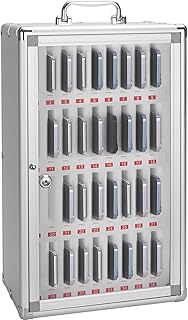
The mobile phone storage system with 36 slots serves as a protected yet efficient method for control of devices throughout classrooms and offices and public areas. This lockable organizer eliminates distractions and stops people from using phones improperly so it protects both security and organization. Schools, workplaces and public areas benefit from its durable construction which includes an acrylic door view through the individual slots. This cabinet provides dependable storage for devices while helping organizations implement phone policy enforcement so it serves as an excellent solution for all types of settings.

This 30-slot acrylic cell phone lock box acts as a protective system for the storage of phones together with wallets and small-sized valuables. Users can monitor their items through its transparent acrylic material, which has durability characteristics and security features built in. Users can use this lock box for office and classroom applications as well as event facilities thanks to its design which supports 30 customizable phone slots. Organizations can use this device because it locks securely to prevent unauthorized phone use thus serving as a tool for implementing strict no-phone regulations. Workers in classrooms, conferences and people in workplaces can use their 30-slot acrylic cell phone lock system to maintain both distraction-free and safe environments.