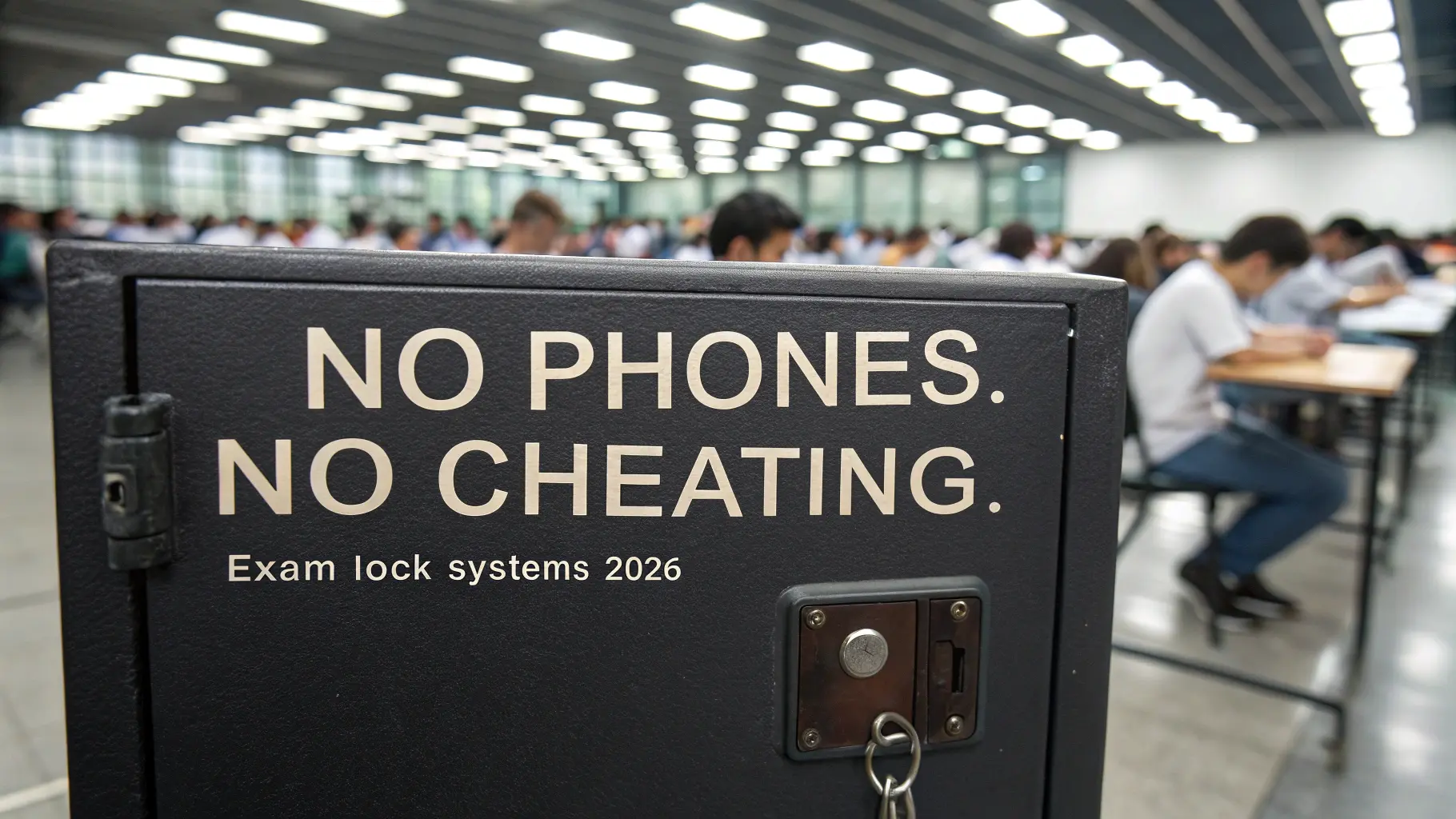
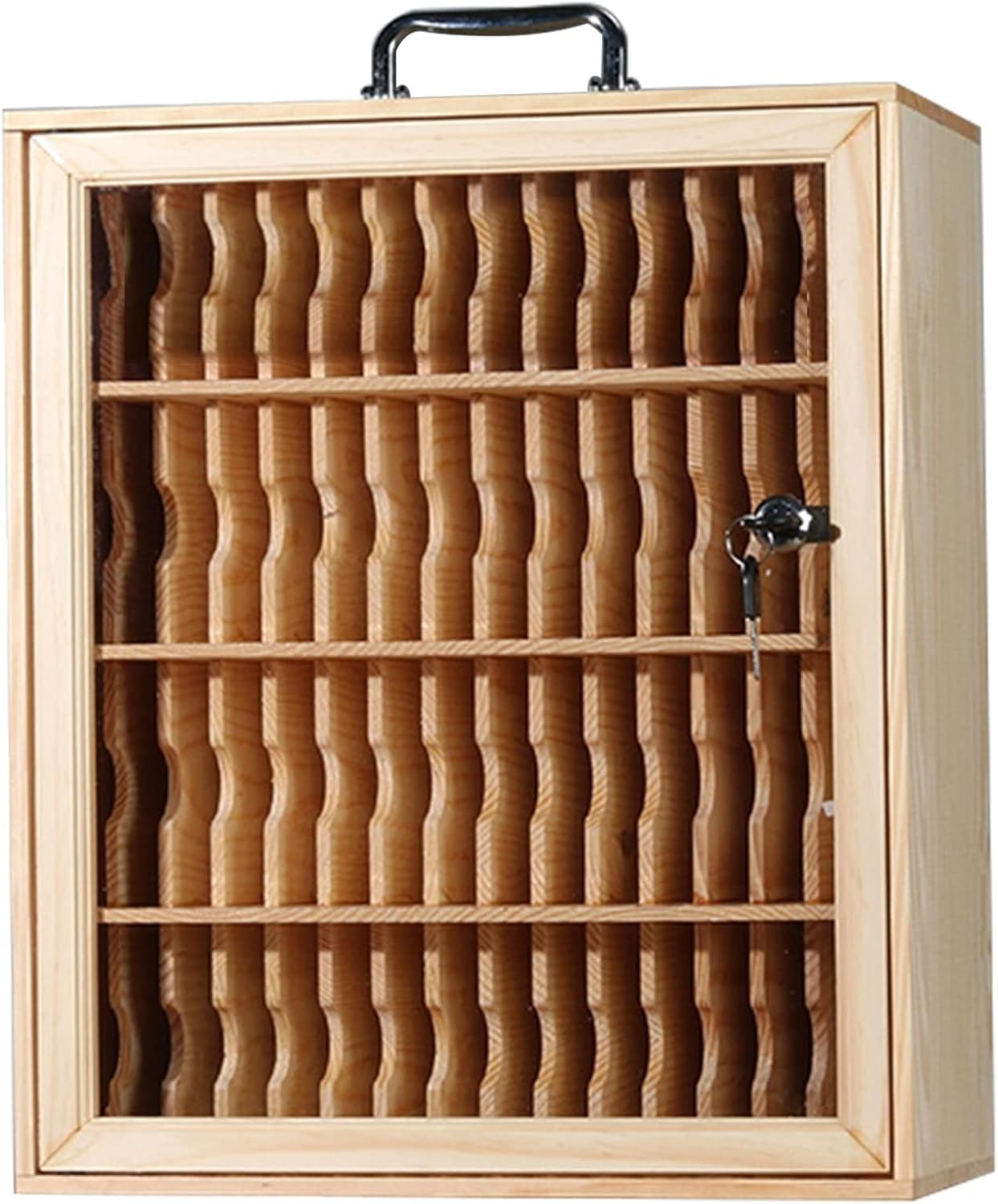
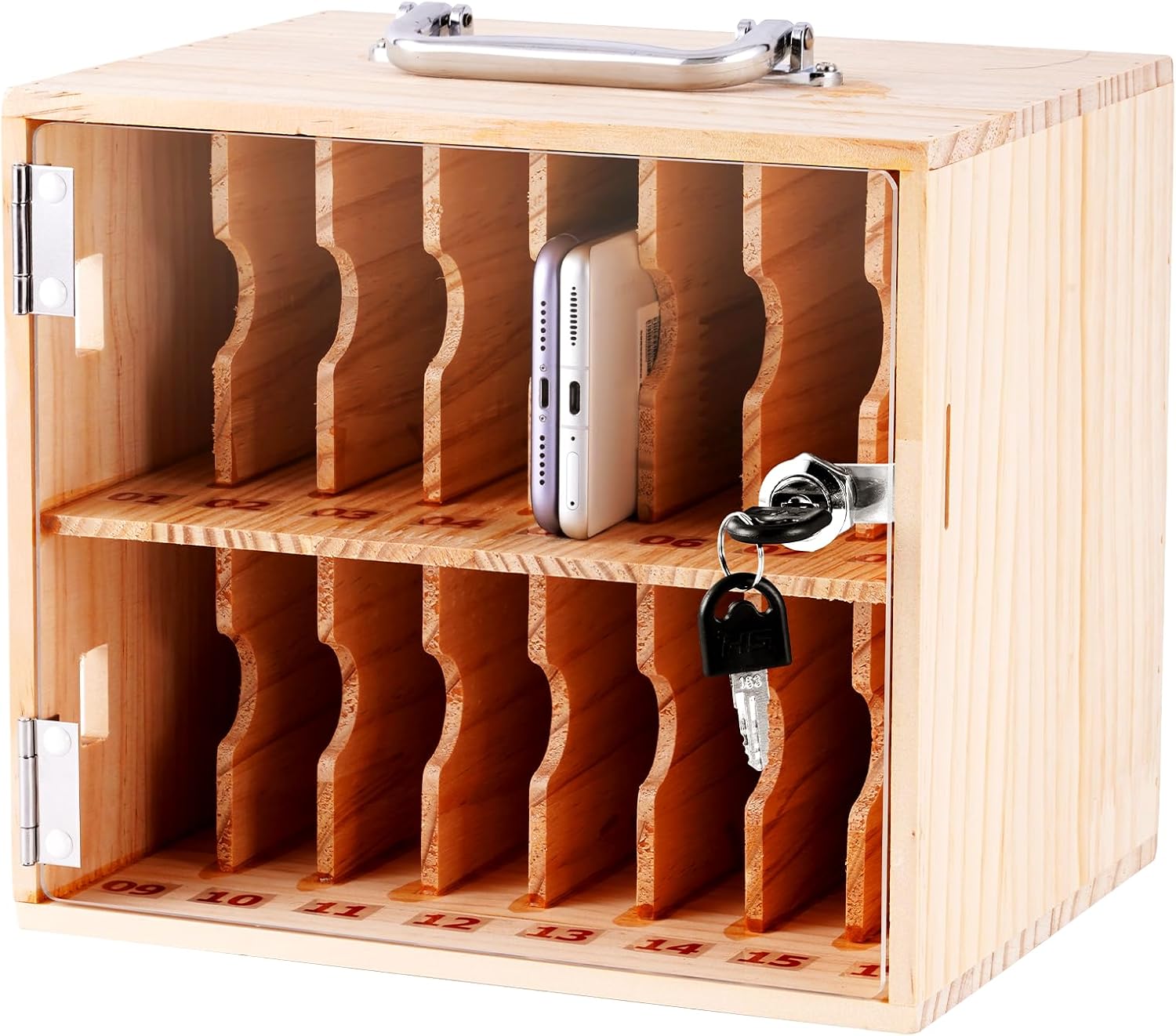
Popularized through models like Yondr-style pouches.The phones get put inside lockable pouches made of fabric that travel with the student but cannot be opened without a special unlocking base.
Strong for preventing access. Weak for storage visibility. Difficulty for proctors to verify devices being present without attending. These can mitigate the risk of theft but create their own verification challenges.
Centralized Lock Cabinets
High-capacity units that can hold a lot of stuff. Applied at test centers processing hundreds of candidates in a single run.They provide improved structural integrity and centralized control. If not managed correctly, it can cause retrieval slow.
I have witnessed bottlenecks with 200 students attempting to pick up devices simultaneously and only one access point.
RFID and Digital Access Systems
It is recommended in high-security scenarios.Each device is tagged. Access is logged digitally. Others integrate with student I.D.s. These reduce human error significantly. Cost is the barrier. It needs technical support for maintenance and setup.
This is overkill for most institutions unless compliance requirements dictate it.
Best Use Cases
Standardized Testing Centers
High volume. Strict compliance.
Systems must be fast, verifiable and scalable. The best set-up is numbered lockers or centralized cabinets.
Universities and Entrance Exams
Mixed environments.
Larger halls can use portable lockers. Modular systems that can be deployed at a large scale required for exam venues.
Certification Centers
Professional environments with repeat candidates.
Consistency matters more than scale. Well-kept, orderly lockers build trust and minimize complaints.
Corporate Compliance Testing
Security is the priority.
This is when digital or tightly controlled systems shine. Audit trails are often required.
I have witnessed bottlenecks with 200 students attempting to pick up devices simultaneously and only one access point.
Setup and Operational Workflow
Even the best system in the world would become redundant, if not executed arguably.
Check-In Procedure
Devices must be collected prior to candidates entering the exam area.
Delay this step and you create chaos.. Students start negotiating exceptions.
Assign slots immediately. Do not allow self-selection.
Device Labeling and Tagging
Use simple tags attached to slot numbers or candidate ids.
Steer Clear of handwritten labels which fade or smudge. Pre-printed tags reduce errors.
Emergency Access Protocol
Every system needs a backup.
Lost keys. Forgotten codes. Medical emergencies.
Have a master access method under tight control to authorized staff.
End-of-Exam Retrieval
This is where the majority of systems fail.
Crowding and confusion are what happen if retrieval is not structured.
Release students in batches. Assign staff to manage flow. Keep the process controlled.
Compliance and Academic Integrity Considerations
Exams are not simply about deterring cheating. They are about proving fairness.
That backs up a good, structured phone lock box for tests.Disputes become easier to handle when there is a clear system. Assigned slots. Recorded procedures. Controlled access.
Fairness is improved when all students go through the same process. No exceptions. No informal handling. Documentation matters. Instructional documents related to storage procedures underlie incident reports. This safeguards the institution as well as the students.
Common Mistakes to Avoid
The most common mistake is underestimating capacity.Purchasers make calculations based on average attendance, not an extreme case. Then it’s time for exam day in bulk. An operational panic of no backup access system. A session can be held up by one missing key.
There is another problem, however, with poor integration of supervision. Storage systems are not one-off solutions. They require staff coordination.
Looking past the material quality ends up costing more in the long run. Low-cost acrylic units may need to be replaced within a calendar year in high usage conditions.
Comparing Phone Lock System Options
Numbered lockers are the best compromise between control and simplicity. They can be used in most environments and are easy to train.
- Sealed pouch systems decrease access risk and complicate verification. They are appropriate for settings where devices can be owned but not used.
- Scale management — centralized cabinets (careful retrieval planning required)
- While RFID systems can give the most control, they are also more expensive and require some level of technical expertise.
There is no best alternative available. What is the right system? It really depends on volume, compliance requirements, and operational capacity.
Who should avoidA few types
These small institutions overinvest in digital systems. If you are using less than 50 devices per session, RFID setups most of the time do not make sense.
Pouch-only systems should be avoided at high-volume centers. It is way too slow and not consistent enough for verification.
Fixed installations should not be used for temporary exam setups. One type of system has portable capability, making it capable of portability with flexibility as well as reduced set up time.
Low-budget shoppers sometimes opt for thin acrylic lockers. Such people seldom ‘survive’ the exam condition repetition.
Recommended Phone Lock Box Configurations
- Small 20 to 40 candidate exams work well with compact portable lockers that have 20 or 30 slots. Easy to move. Quick to deploy.
- For medium setups with 50 to 120 candidates → Modular lockers in poly-cubicle format This eliminates bottlenecks and enables distributed access.
- Big test rooms need centralized planning. Multiple high-capacity cabinets strategically located help reduce congestion.
- Fixed systems are used to good effect in long-term testing clinics. Portable machines work better for facilities with shifting layouts.
- Charging capabilities are often not used for exams. In shorter sessions, they add cost without actual advantage.
Practical Buying Checklist
- Ideal for confirming peak device volume not average
- Check internal slot dimensions. Standard compartments rarely fit larger smartphones that are in cases.
- Choose metal construction for durability. Check for lock quality and replacement possibilities.
- Decide on access type. Key, combination, or digital. Each has operational implications.
- Plan for labeling. Your systems should be able to identify clearly.
- Evaluate retrieval flow. Plan for return of devices under time constraints.
- Check maintenance requirements. Locks wear out. Hinges loosen. Replacement parts should be available.
- Align staff capacity with the type of match system Complex systems require trained operators.
Final Verdict
Exam concepts require control, consistency and a piece of evidence.General classroom storage hides in plain sight, but is designed for convenience, not accountability. A proper exam hall phone locker system lowers risk, eases operations, and secures institutional credibility.
The most expensive systems are not always the best. Fit the environment, scale reliably, and perform under pressure.Customers who have been price-only buyers typically replace their systems in a year. The buyer who customizes the system to their workflow doesn’t usually need to.
FAQs
Which phone lock box for exams is the best?
Numbered metal lockers with locks are the best mix of security, usability, and cost.
Are sealed pouch systems reliable for testing centers?
They prevent access effectively but make verification harder in large groups.
How many phones can fit in a standard exam locker?
Units generally have between 20 and 60 devices. Large centers use multiple units.
Must I go with digital or RFID Systems?
Only if the audit tracking is needed or in very high volume.
Can students take out their phones during breaks?
Only if the protocol allows it. Most high-stakes tests are completely closed.
How can you lock out a student during an exam?
It becomes nationally important to have a backup access method. A master override system is always recommended.
How do you avoid arguments about lost phones?
Double up with assigned slots or labeling systems, and controlled check-in and retrieval procedures.