...
XStore theme eCommerce WordPress Themes XStore best wordpress themes WordPress WooCommerce Themes Premium WordPress Themes WooCommerce Themes WordPress Themes wordpress support forum Best WooCommerce Themes XStore WordPress Themes XStore Documentation eCommerce WordPress Themes
Phone Lock Box Buying Guide: Key vs Digital vs Combination

Phone Lock Box Buying Guide: Key vs Digital vs Combination

Facebook
Twitter
Pinterest
WhatsApp

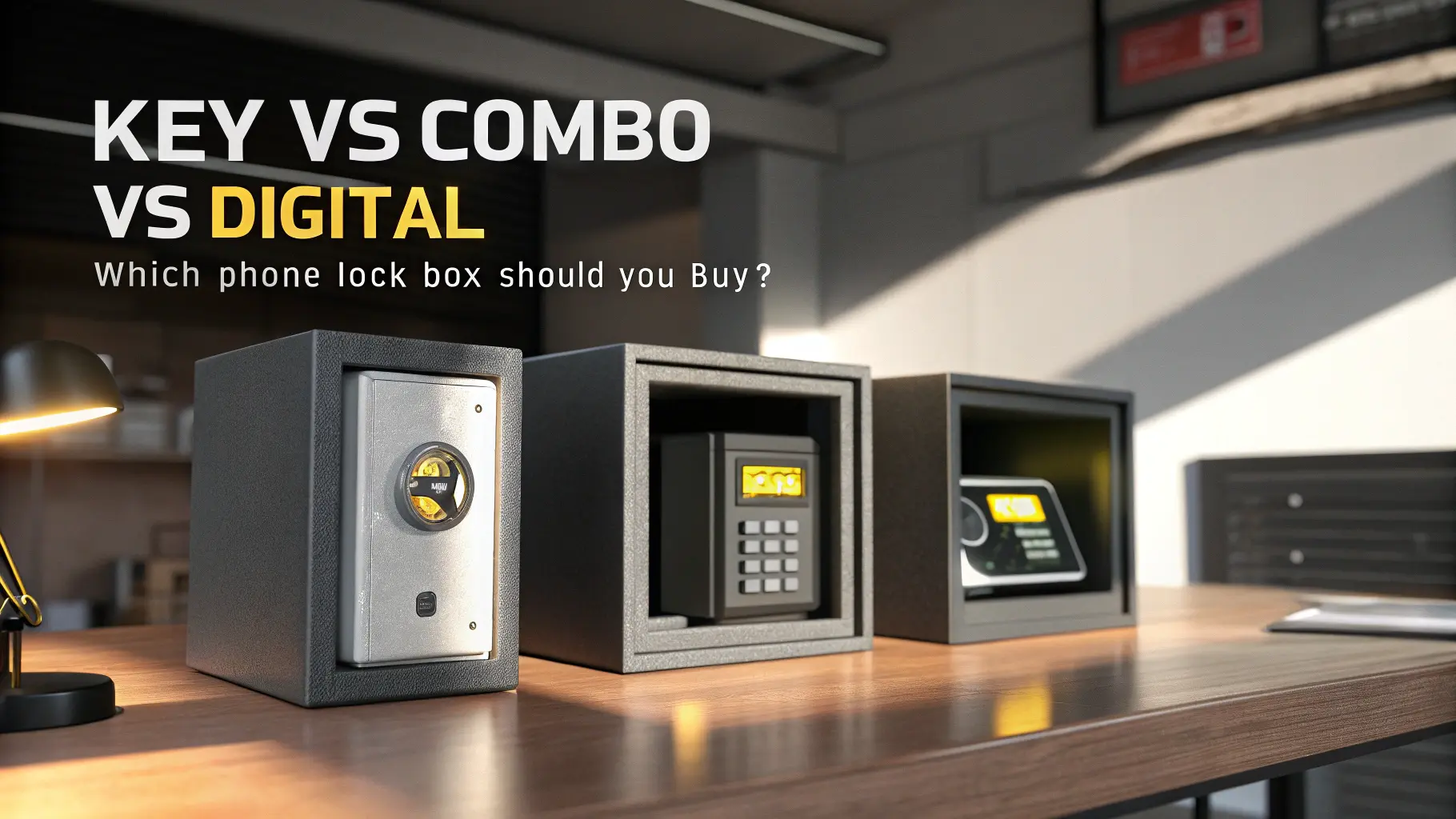
When shoppers shop for a phone lock box, they frequently mainly consider the material — metal, acrylic, or hybrid — while neglecting the element that most determines security and usability: the lock. A strong box can be nearly useless with the wrong locking mechanism. Locks fail for all the predictable reasons: a lost key, a forgotten combination, eroded batteries, or a digital system that wasn’t properly installed. Avoiding these pitfalls requires knowledge of the unique characteristics of each lock type to ensure that the system is tailored to satisfy every environment.

A Guide to the Different Kinds of Locks in Phone Lock Boxes

Today, both defining smaller percentage performance profiles and productivity requirements, can mean many different lock types for phone lockers.

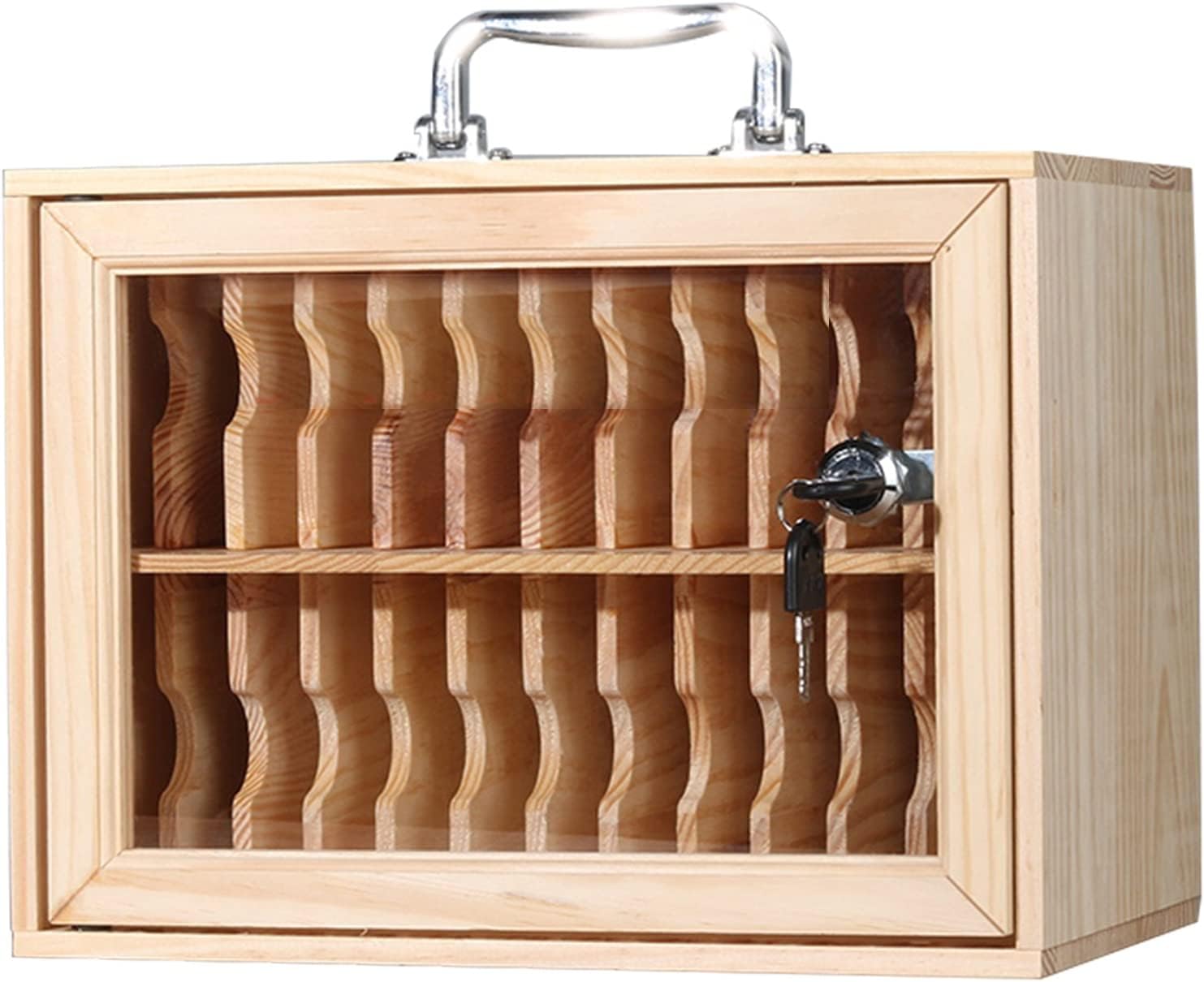
Key Locks remain the simplest. They are dependent on physical keys and standard lock cylinders, usually combined with metal or hybrid cabinets.

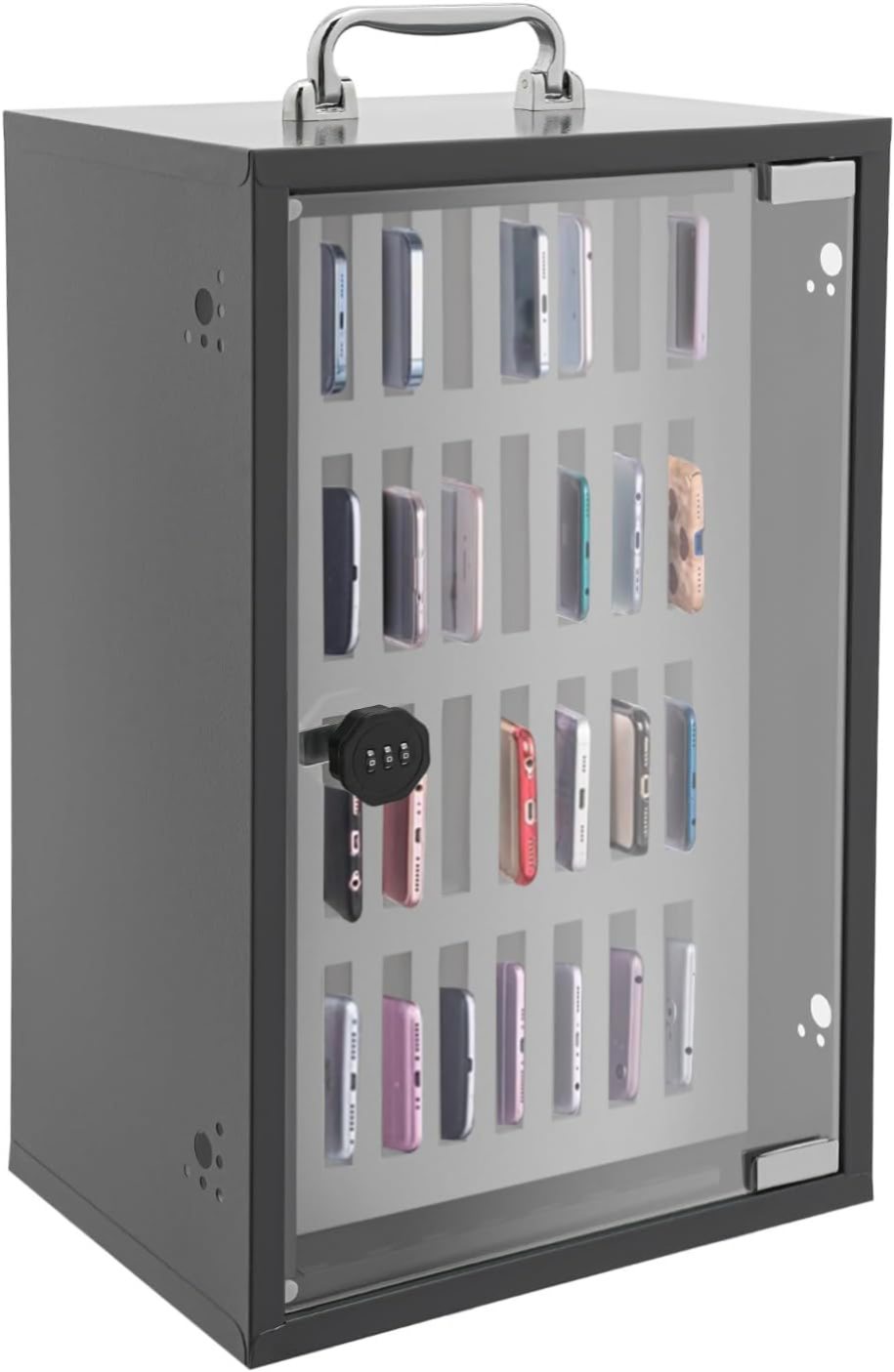
Combination Locks eliminate keys entirely. Users memorize a numeric code or set a custom combination, eliminating the problems of lost keys but requiring reset solutions.

Digital Keypad Locks have features like codes and access. Most can connect to audit trails or centralized management systems, but are reliant on power sources and occasional maintenance.

Smart/RFID Locks — this is the top end of phone locker security They use cards, fobs or mobile credentials and in many cases are part of larger security systems. These can be rarer to find in a traditional classroom or office setting but become more common at high-stakes testing centers, or corporate labs.

Each has its own trade-offs when it comes to security, cost, maintenance, and scalability. Understanding these trade-offs is fundamental to preventing buyer regrets.

Each Environment And Which Lock Type is Best

Schools: The locks are a whole lot easier to distribute to multiple students. Minimal audit requirements, and resiliency against casual tampering.

Offices: Digital locks offer administrative control that creates a secure storage environment for employees and contractors. They also support audit logging.

Homes: key locks or small combination lockers will do. Most families do not need audit tracking and cost is usually a key consideration.

Testing Centers: Hybrid systems combining combination and digital locks ensure redundancy. High-value items and frequent turnover demand both security and flexibility.

Hidden Costs & Long-Term Considerations

Real buyers neglect continuous costs. Then those may have multiple keys, a replacement of the same. Some combination locks require a professional reset. Digital locks require the replacement of their battery and occasional firmware upgrades. This means that the largest institutions could face overhauls of entire systems every 5–7 years when locks are obsolesced or fail. Ignoring these factors leads to hidden costs that exceed the initial purchase price.

Real Buyer Mistakes

Thus, common mistakes become apparent from following hundreds of purchases. The most common regret is to go with the cheapest option; a $120 acrylic locker featuring thin metal doors and a basic key lock frequently breaks down after just months. User behavior that does not fall in three positions is simply forgotten combinations, lost keys or software that improperly manages the digital codes. Not planning for scale subsequently leads to new systems being deployed over and over again until the level of capacity reaches beyond the initial 12–24 slots as required for their institution.

Key Locks: Advantages, Disadvantages & Top Use Cases

Key locks are straightforward. Only one cylinder lock per compartment, or a master key system for multi-slot boxes enable swift physical takeover.

  • Pros:
    Low-cost (capital and operational) with little installation complexity
  • No power requirements
  • Works reliably across environments

Cons:

  • Keys can be misplaced or copied
  • It is hard to deal with multiple users and their keys
  • Limited audit or access tracking

Best Use Cases:

Key locks work best in little spaces with few users — homes, small offices or classrooms where one administrator manages the storage. Since a single lost key can prevent access to an entire cabinet of 12 slots, key management is critical for a 12-slot metal locker.  Boxes under $150 employ this system, and it would work well for low-risk situations.

Our most popular products based on sales.

Our products most often added to Wishlist's.

Our best-selling new and future releases.

Most popular products as Most Gifted Products.

Combination locks: Pros and cons, best use cases

Combination locks eliminate physical keys from the equation, asking users to enter a numeric code. They are also prevalent in schools because they simplify distribution and eliminate lost key problems.

Pros:

  • No physical key dependency
  • This means that codes can be shared or reset without having to replace the hardware
  • Moderate pricing, typically $150–$300 for multi-slot lockers

Cons:

  • Users may forget combinations
  • Multi-User Setups Being Time Intensive For Reset
  • Less expensive models can be more readily manipulated

Best Use Cases:

Combination locks work well for schools, summer camps and shared training environments. To illustrate, a 24-slot combination locker at a high school is sufficient to accommodate the daily turnover with little administrative involvement. In larger offices, where several codes could be used, this can become an unwieldy process unless these are integrated into a computerized platform.

Digital Locks: Benefits, Limitations & Optimal Applications

Digital keypad locks provide a more sophisticated control. With some models, users can also assign individual codes, set time restrictions and track access events.

Pros:

  • Audit trails and programmable access
  • Scalable for dozens of users
  • No physical keys to misplace

Cons:

  • It has batteries or needs to be wired up, meaning that there are maintenance aspect
  • Greater initial outlay, $300–$700 for medium-grade multi-slot models
  • Well known to be sensitive to environmental conditions if inadequately rated

Best Use Cases:

Digital systems help offices, corporate labs and high-stakes testing centers. For example, IT administrators can assign temporary codes to contractors without giving them a key when the locker they use is a 36-slot office locker with digital locks for ease of access and increased security measures. Digital locks excel in settings where multiple people have regular access to the locker, and accountability matters.

Security Comparison Table

Lock Type

Theft Resistance

Ease of Use

Maintenance

Cost

Scalability

Key

Medium

High

Low

Low

Low

Combination

Medium

Medium

Medium

Medium

Medium

Digital

High

Medium

Medium (batteries)

High

High

Smart/RFID

High

Medium

Medium (tech updates)

Very High

Very High

Final Recommendation Framework

Having a structured approach makes the decision easier:

  • Budget: Assess how much can be spent near term and longer term.
  • Floor area: small, fewer than 15 may use a key lock, then 15–50 needs at least a combination or digital safe in place. Above 50 we recommend digital / smart/hybrid/biometric/RFID options.
  • Security level – Determine the risk of theft or unauthorized access
  • Key Considerations: High volume favors combo/digital for speed/track.

Practical Buying Checklist

  • The confirm box will fit the biggest device expected.
  • Check lock durability: brass cylinder or plastic keypad.
  • Evaluate replacement or reset procedures.
  • Assess power or battery requirements.
  • Administrative Control Requirements and Audit Trails Should be Considered
  • Verify compliance with current security or access systems.
  • Consider costs for long-term maintenance and upgrades.

FAQs

FAQs

What is the best lock for high value phones?

It is preferable to use digital locks or smart/RFID systems, as these provide the best tamper resistance, and support for access tracking/recording.

Are combination locks easy for students to use?

Yes, but there need to be regular reminders or simple reset procedures to prevent forgotten codes.

How often do digital lock batteries fizzle?

Usually every 12–18 months depending on usage; environments with high turnover may attest annually.

Are key locks multi-users?

Only if master key systems are used; otherwise multiple tenancy makes key management convoluted.

Are smart/RFID lockers worth the price?

For high-stakes testing centers or corporate labs that experience frequent staff turnover and have security needs, they are generally worth the cost.

The functional success of a phone lock box is specified by choosing the correct lock mechanism. Consistent lock type with environment, user behavior and long-term maintenance results in a working system for a number of years without undue complication. An awareness of actual failures in the real world and in buyer behavior offers insight to decide correctly between key combinations as well as digital systems.

The process minimizes errors, maintains cost-effective methods, and provides a safe phone storage solution that works for your environment.