...
XStore theme eCommerce WordPress Themes XStore best wordpress themes WordPress WooCommerce Themes Premium WordPress Themes WooCommerce Themes WordPress Themes wordpress support forum Best WooCommerce Themes XStore WordPress Themes XStore Documentation eCommerce WordPress Themes

U.S Phone Ban Policies for Schools & the Solution for Phone Storage

Facebook
Twitter
Pinterest
WhatsApp

Schools and offices across the U.S. are increasingly confronting the challenges of managing personal mobile devices. The rise of full-day and classroom-only phone bans has triggered a growing need for reliable phone storage solutions. Students and employees alike are often caught between compliance requirements and personal convenience, creating an operational dilemma for administrators. Real-world experiences show that a carefully selected phone lock box can resolve daily friction, reduce distractions, and maintain device security without overcomplicating workflows.

Data from 28 states implementing phone restrictions highlight that policies vary widely, with some adopting bell-to-bell bans while others enforce device restrictions only during class hours. Observing these trends helps decision-makers choose the right storage solutions and avoid common pitfalls seen in schools and offices alike.

The Complete List of States With Phone Bans

State

Year of Ban

Type

Notes / Exceptions

Florida

2023

Bell-to-Bell

First statewide law, high enforcement

New Jersey

2026

Bell-to-Bell

Latest statewide adoption

Texas

2025

Bell-to-Bell

District-based variations

New York

2025

Classroom-Only

Partial enforcement, medium impact

Ohio

2025

Classroom-Only

Challenges in monitoring compliance

Georgia

2025

Classroom-Only

Limited exceptions during breaks

Indiana

2025

Classroom-Only

Medium impact, classroom focus

Tennessee

2025

Classroom-Only

Local districts decide penalties

North Carolina

2025

Classroom-Only

Medium impact

Virginia

2025

Classroom-Only

Device monitoring varies by school

Louisiana

2025

Classroom-Only

Classroom-focused enforcement

Missouri

2025

Classroom-Only

Medium enforcement level

Wisconsin

2025

Classroom-Only

Partial compliance issues

Oregon

2025

Classroom-Only

Classroom-only ban

Nevada

2025

Classroom-Only

Exceptions allowed during lunch

Utah

2025

Classroom-Only

Medium enforcement

Iowa

2025

Classroom-Only

Classroom compliance challenges

Kentucky

2025

Classroom-Only

Medium impact

Arkansas

2025

Classroom-Only

Enforcement varies

Alabama

2025

Classroom-Only

Medium compliance level

Nebraska

2025

Classroom-Only

Classroom-only policy

New Hampshire

2025

Classroom-Only

Limited exceptions

North Dakota

2025

Classroom-Only

Medium enforcement

Oklahoma

2025

Classroom-Only

Medium compliance

South Carolina

2025

Classroom-Only

Partial enforcement

Vermont

2025

Classroom-Only

Medium impact

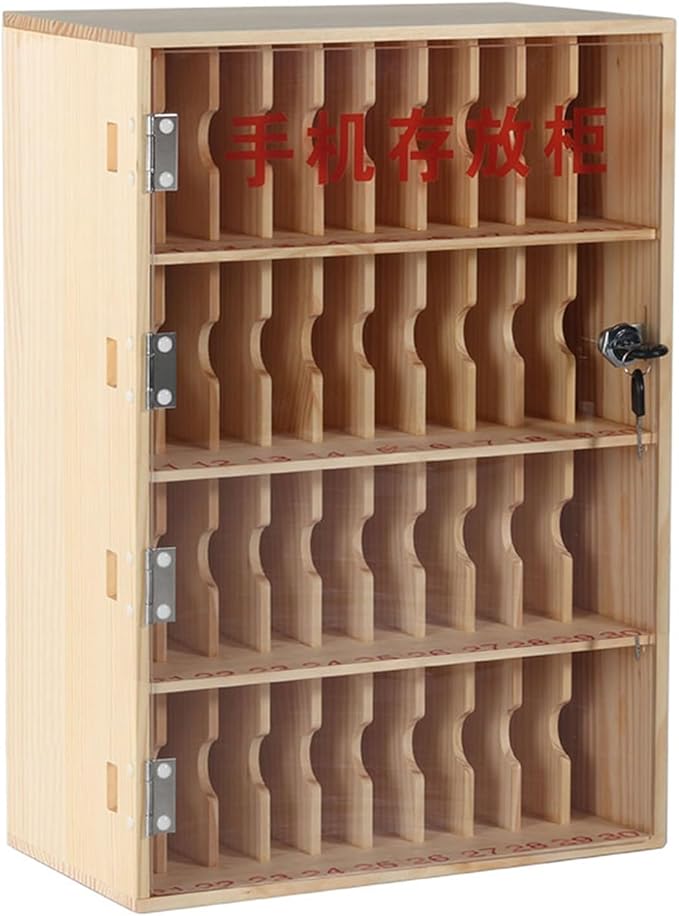
Other schools facing all-day bans were installing storage lockers for phones so as to obey, without daily monitoring. Trying to consolidate hundreds of mobile devices into a secure yet communally accessed environment has been known to help reduce distractions as well as protect the device itself from damage, and these units make that happen.

Policy Timeline (2019–2026)

A timeline of 2019 to 2026 reveals an accelerating adoption of statewide phone restrictions. Florida was first out of the gate in a 2023 US full-day school phone ban (for all students) and was followed by Texas — attempting the same for 2025, then New Jersey for 2026. Bans limited to classrooms spread throughout the Midwest and Northeast, mirroring regional priorities — and administrative choices.

Early adoption states reported good compliance rates in conjunction with secure wall-mounted cell phone lock boxes, whereas late adopters complained of logistical problems during the initial phase

Observations & Trends

In the South and some parts of the West, advocates are focused on state-level bans that extend throughout the school day; in the Midwest and North East, they have taken the approach of banning only at the classroom level. Schools that began using cell phone lock boxes reported fewer class interruptions; less loss of the devices, and greater satisfaction on the part of teachers.

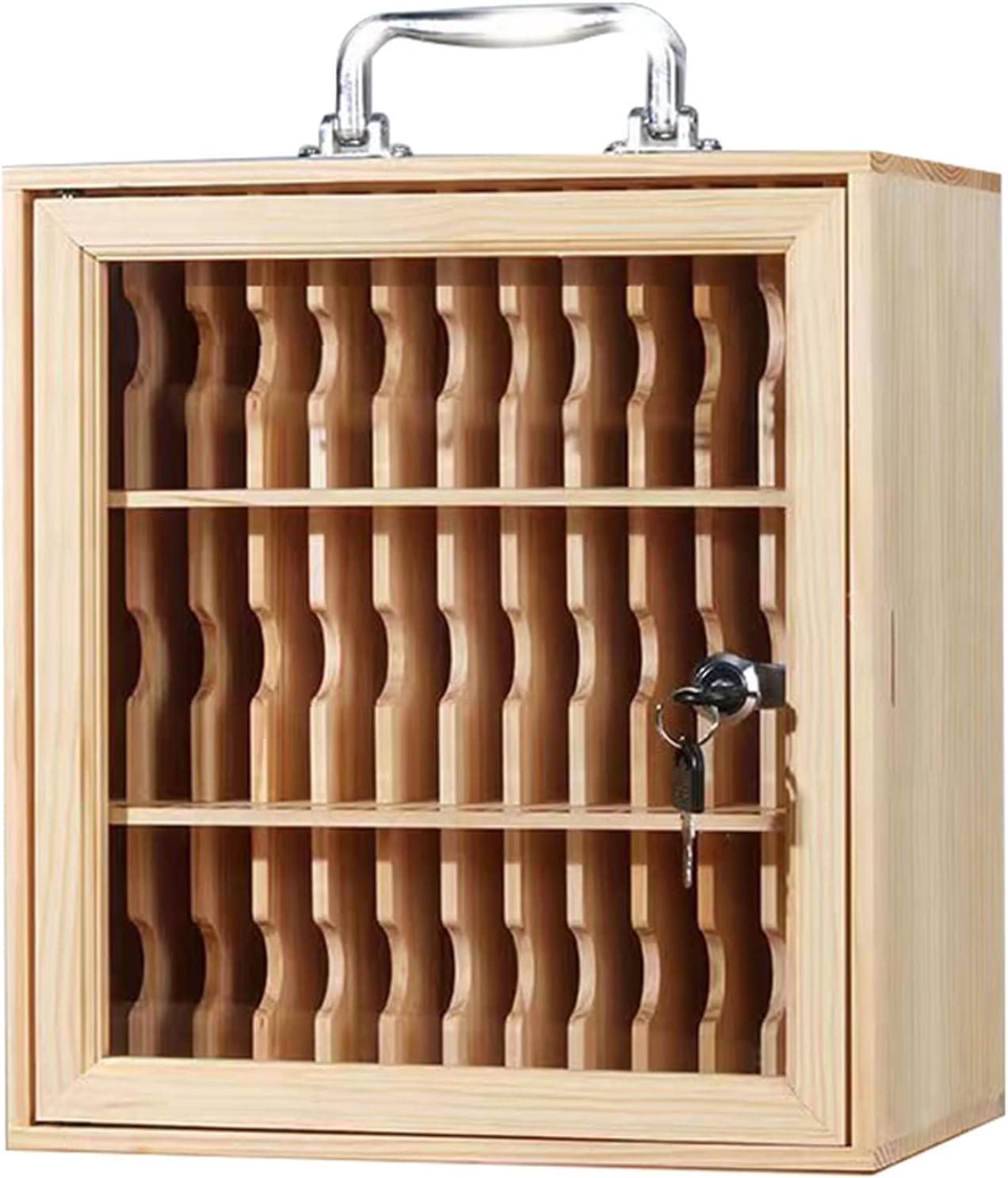
These mixed-use scenarios necessitate portable storage solutions for teachers while full-day bans benefit from centralized, wall-mounted units. Cost is one of the most common decision points. Low-cost acrylic choices work for visibility requirements and humble budgets, while metal lock boxes provide upper-level security and durability. Buyers complain they regret choosing one without secure locking mechanisms or with inadequate compartment sizing.

Spotlight Deep-Dives

Florida — First Statewide Bell-to-Bell Ban

Florida’s mandate affects over 2.7 million students across K–12 schools. Enforcement relies on structured drop-off zones and multi-device phone storage boxes at the classroom entrance. Observations from administrators show that acrylic lockers with numbered compartments minimize disputes and loss claims. Metal lock boxes are preferred for schools concerned about vandalism or tampering. Buyers often regret choosing units too small to accommodate larger phones and tablets.

Texas – District-Based Variations

Texas enables districts to customize policies, resulting in a diverse patchwork of enforcement. Some schools utilize portable, wall-mounted cell phone lock boxes in hallways, while others have individual lockers affixed within classrooms. Charging integration is often not considered by buyers; units without cable management can lead to tangled cords and longer device downtimes. Best practices based on real-world feedback show you should plan for both storage volume and physical device size.

Ohio – Classroom-Only Enforcement

Our most popular products based on sales.

Our products most often added to Wishlist's.

Our best-selling new and future releases.

Most popular products as Most Gifted Products.

Classroom-only bans in Ohio challenge teachers who must track device compliance throughout the day. Portable phone storage boxes for schools become essential for classrooms without centralized drop-off areas. Acrylic lockers offer visibility to quickly verify compliance, but they provide less tamper resistance than metal counterparts. Schools using portable solutions note maintenance simplicity but must consider durability over multiple school years.

New Jersey – Most Recent Statewide Implementation

New Jersey’s bell-to-bell ban in 2026 introduced premium multi-device phone lockers across districts. Early feedback shows that higher upfront cost correlates with fewer maintenance issues and better longevity. Buyers sometimes overestimate required compartment size, leading to underutilized storage. Matching locker size to average device dimensions prevents wasted space and budget.

Comparison of Phone Lock Box Types

Feature

Metal Lock Boxes

Acrylic Lockers

Portable Storage Box

Security

High, tamper-resistant

Medium, visible compartments

Low to medium, convenient but less secure

Capacity

12–30 devices typical

6–20 devices typical

6–12 devices portable

Durability

Long-term, scratch-resistant

Moderate, prone to cracking

Short-term or supplemental use

Cost

Premium

Mid-range

Budget-friendly

Maintenance

Low, easy cleaning

Moderate, scratches visible

Easy but limited lifespan

Best For

Full-day bans, high-traffic schools

Classroom-only compliance, visual checks

Temporary solutions, flexible classrooms

Common Buyer Mistake

Oversizing for budget reasons

Choosing weak locks for high-risk environments

Underestimating device numbers

Buyers will want to align units with their policy scope and type of devices anticipated as well as security rigor. Multi-device lockers with cable management integrated are desirable in districts enforcing yes bans for the entire day.

If a Phone Lock Box Alternative is Right For You

Schools with large classes may also need multi-bike phone lock boxes, rather than small single-phone devices that’ll have available spots for less than the entire class.

Facilities that need to secure high-value devices can go with metal or reinforced lock boxes as opposed to the basic plastic ones.

Classrooms or offices with limited wall space may prefer freestanding or stackable lock boxes over mounted models.

At the very least, environments requiring charging integration should opt for lock boxes with built-in cable management to minimize tangling without costly modifications — over a simple storage-only box.

In schools or offices with high device turnover, durable and long-lasting units should be used to avoid repeated replacements.

Practical Buying Checklist

  • It is clear that the size of device dimensions should be verified, compartments planned around it.
  • Based on classroom layout, choose from portable (with casters), wall-mounted or free-standing units.
  • The first thing you should check is the type of lock: keyed, combination or electronic.
  • Think about material: acrylic for sightlines; metal for strength.
  • Even if devices need power while stored, ensure that they are charging compatible.
  • Assess capacity against classroom or office population.
  • Search for how much maintenance is needed and the longevity of the equipment.
  • Compare cost versus expected lifespan.

FAQs

Which states have prohibited cell phones in schools?

Twenty-eight states have partial or full-day bans in effect. Among the earliest statewide adopters were Florida, Texas, and New Jersey.

Are phones prohibited from the entire day or only during class?

It varies. States take different approaches, with some implementing bell-to-bell bans and others restricting devices only during class periods.

Why are schools adopting phone bans?

Policies are driven by distractions, academic focus and digital wellbeing.

What is the best classroom phone lock box?

Security metal locker, visibility acrylic and portable box versatility based on the type of policy.

Can phone lockers charge devices?

Certain units come with integrated cable management for simultaneous charging.

How do I select the correct size locker?

Match compartments to the largest device expected plus a small buffer for protective cases.

Are wall-mounted cell phone lock boxes superior to freestanding?

Wall-mounted units save floor space and prevent tipping, but plasterwork is required for installation. Freestanding boxes offer mobility.

What do buyers tend to get wrong?

They are common regrets — choosing undersized compartments, weak locks or poor material or not getting a unit with charging capability.